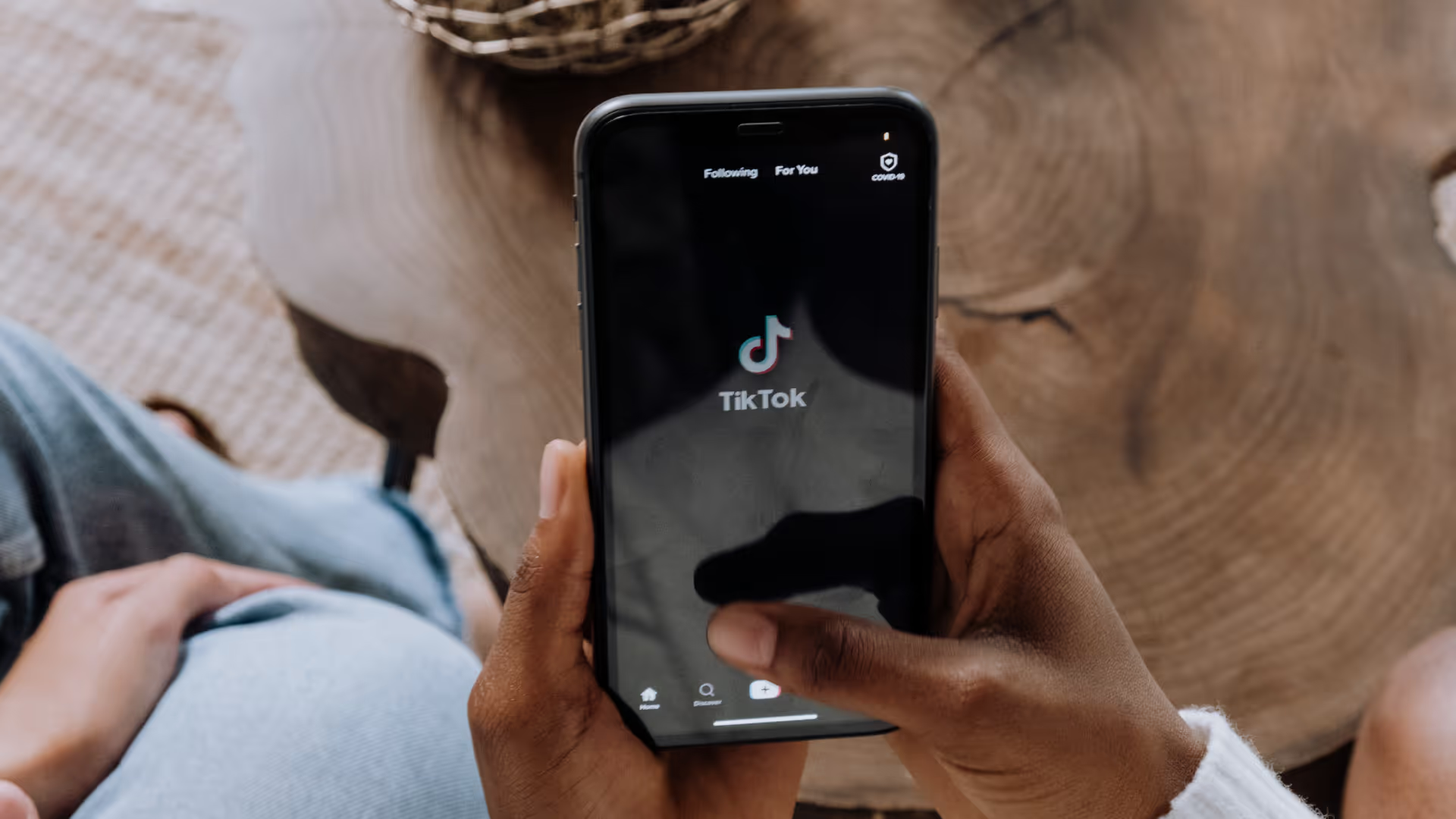
In September 2021, TikTok announced in a blog post that one billion people use the platform every month. That's one in seven people in the world consuming content — dances, comedy, satisfying drawing clips, educational beauty content, and more.
The secret to TikTok's popularity is the democratization and accessibility of content creation and storytelling. On TikTok, anyone can create and go viral with short videos without extensive editing experience or knowledge. The platform's algorithm allows good content that connects with people to reach thousands or millions of views even from accounts with few followers. TikTok's main page is specifically curated for each user's sense of humor, creating a unique and addictive experience. No matter how niche your content seems, on TikTok it can find its audience.
Today, despite being the baby of social platforms, TikTok is forcing its older competitors to adapt to its threat: Instagram has declared it's no longer a photo-sharing app and heavily promotes the use of Reels, a copy of the short-form content born on TikTok. For 2022, we should be prepared for TikTok's astronomical growth to continue shaping social media communication in several ways:
Authentic, unfiltered, democratized, and entertaining content will continue gaining ground in social media under TikTok's influence. With attention spans shrinking year after year, the use of "microcontent" that captures attention quickly will be key in 2022, along with looping videos, remixes, overlays, voiceovers, and trending music.
For content creators, it's worth noting that as a consequence of TikTok's growth over the past two years, the notion of what an influencer is has evolved. It's no longer necessary to be someone with many followers; what matters is having broad reach. In the new social media distribution economy, authority and reach will replace followers. Thanks to TikTok, we will continue to see that the most viral, popular, and shared content can come from anyone, anywhere in the world.